Questions every fleet owner has about hybrids, answered
April 1, 2026If you're wondering whether or not hybrid vehicles might be right for your fleet, this guide answers the key questions you should pose.
What is a Hybrid vehicle?
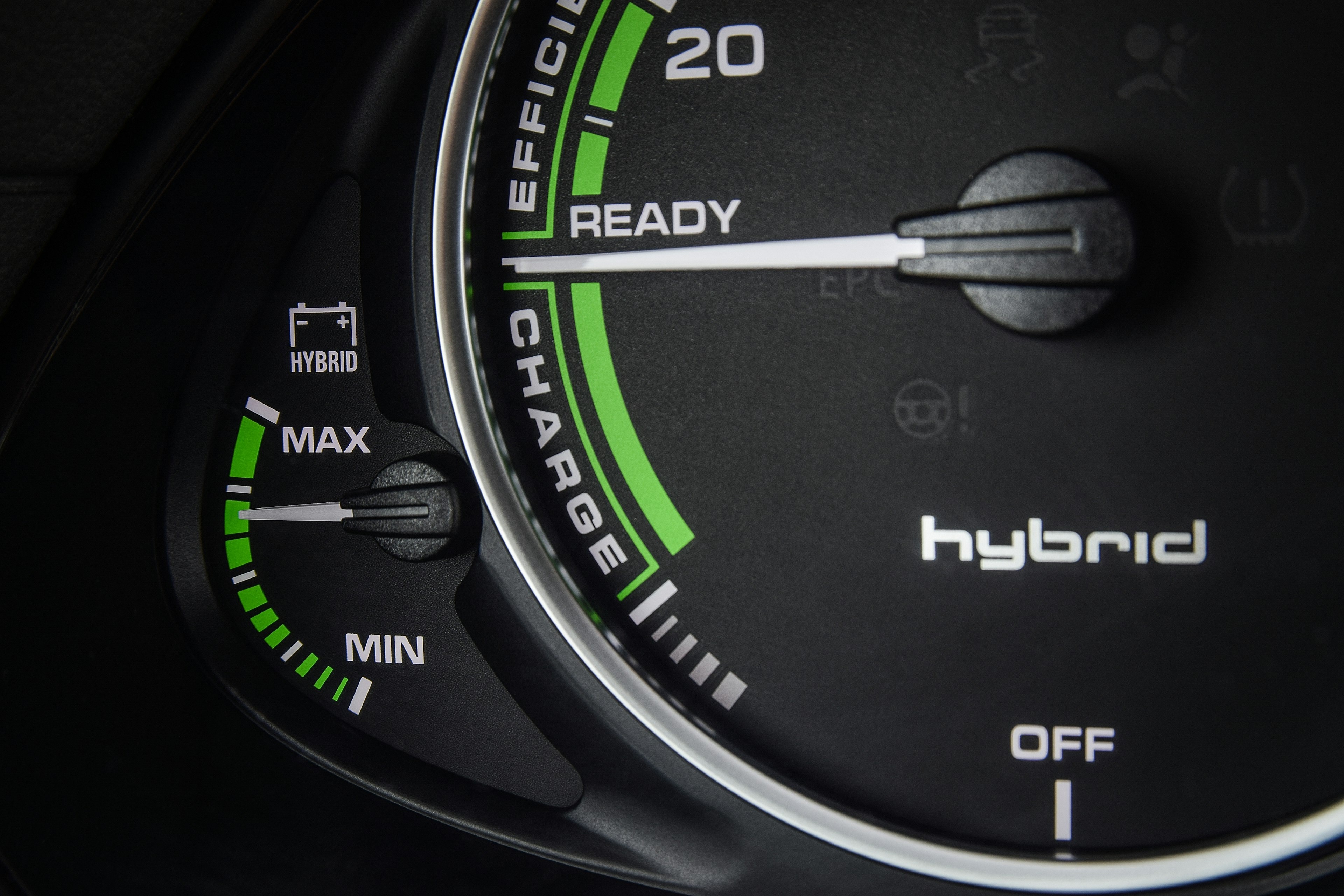
A hybrid is a vehicle that combines the use of a traditional engine with an electric motor. There are two types of hybrid electric vehicles (HEVs) that people often mix up: conventional and plug-in hybrids.
Conventional Hybrids
Conventional hybrid vehicles have both an internal combustion engine (ICE) and an electric motor that uses batteries. However, instead of plugging the vehicle into an outlet to charge the battery, it is charged while it’s being driven via the engine, and regenerative braking. When a car decelerates, the regenerative braking system captures kinetic energy and stores it in the battery to power the electric motor.
Plug-in Hybrids
A plug-in hybrid, also called a full hybrid, has a battery that's charged through regenerative braking, the engine, or can be plugged into an electrical outlet. Plug-in hybrids have larger batteries than conventional hybrids, so you can drive in all-electric mode for a longer distance (~20-50 miles). Using all electric mode, a vehicle driving 100 miles a day may be able to drive up to 50 purely on electricity and the remainder with the conventional engine, cutting fuel consumption.
What are the pros and cons of the different powertrains?
There are many benefits to hybrid electric vehicles, but whether or not hybrids are right for your fleet will vary on a number of things. Let's take a look at some key considerations.
Conventional hybrids vs. battery electric vehicles
Battery electric vehicles (BEVs) are appopriate for many fleets and can save significant sums, but there are a few reasons a hybrid might be a better fit than a fully electric vehicle. It depends on the needs of your unique fleet. Read on if you’re stuck between hybrid or BEV.
Less change. Taking on ownership of an BEV is a little more complicated than taking it for a test drive and writing a check. Fleet owners have to think about timing their routes around available charging stations, installing charging stations at a depot location, and training their drivers.
Hybrid electric vehicles, on the other hand, are a way for consumers and fleets to reduce some costs without having to worry about range anxiety or major changes in their routes.
Greater variety. Hybrids still offer a broader and more immediately accessible range of options for fleet managers. From pickup trucks to full-size SUVs, hybrid powertrains span nearly every vehicle segment and price point, making them a practical bridge for fleets not yet ready to commit fully to BEVs.
Better remarketing options. The used BEV market — once a thin, early-adopter niche — has matured significantly. Used EV sales in the U.S. increased by 62.6% year-over-year in 2024, with over 287,000 units sold, and for full-year 2025, used EV sales rose another 35% year-over-year. However conventional hybrids remain the more predictable remarketing option. They require no charging infrastructure, carry far less battery-health uncertainty, and appeal to a broad buyer pool. For fleet managers focused on maximizing residual value and minimizing remarketing friction, hybrids continue to hold an advantage, even as the used BEV market steadily catches up.
Conventional hybrids vs. regular vehicles
Interested in the benefits of hybrid electric vehicles, but not sure if it’s worth it to make the jump? In many cases, the total cost of ownership for a hybrid ends up being lower than a gas-powered vehicle. Here are a few other reasons you may consider procuring hybrids instead of gas vehicles:
Positive brand image. Consumer expectations around corporate sustainability haven't gone away; they've just gotten more discerning. A 2025 survey of over 5,000 consumers found that 78% consider sustainability at least somewhat important when choosing where to buy, and a 2024 Simon-Kucher study of more than 6,000 consumers across six countries found that 64% rank sustainability among their top three purchasing factors. But there's a catch: only 20% of consumers say they actually believe the sustainability claims brands make, meaning that visible, verifiable action matters far more than messaging. For a fleet-dependent business like a landscaping company, swapping gas-powered vehicles for hybrids isn't just a talking point; it's a tangible, daily demonstration of environmental commitment that customers can see pulling up to the job site.
Maintenance costs are a draw. A common concern from potential hybrid buyers is that the electric motor will require additional maintenance; however, routine maintenance and minor repairs on a hybrid are generally no higher than on a conventional gas vehicle — and in some areas, they may actually be lower. That's partly because the hybrid's regenerative braking system handles much of the braking load, significantly reducing wear on conventional friction brakes and extending their service life. Battery degradation is rarely a concern in practice, and when it is, owners are well protected: federal law requires hybrid and EV batteries to be covered for at least eight years or 100,000 miles, and in California that coverage extends to 10 years or 150,000 miles, a standard that Toyota, for example, has adopted nationally across all of its hybrid models. For fleet managers running high-mileage vehicles, that combination of lower brake wear, comparable routine maintenance costs, and strong warranty protection makes hybrids a financially attractive choice.
Better fuel economy. A gas vehicle will only burn gasoline to move. But since a hybrid vehicle will charge through regenerative braking while driving, you’ll significantly cut the amount of money you need to spend on gas and be able to drive longer distances.
How much gas do hybrid cars save?
The more fuel-efficient a car is, the more money you'll save in the long run. As of mid-March 2026, the AAA national average for a gallon of regular gasoline is $3.72 (a sharp recent rise due to geopolitical tensions in the Middle East), underscoring just how exposed conventional fleets are to fuel price volatility. According to the EPA, the average model year 2024 new vehicle achieves a record-high 27.2 mpg. At that rate, driving 15,000 miles a year costs roughly $2,060 in fuel annually. A comparable hybrid averaging 45 mpg cuts that figure to around $1,240, a savings of more than $820 per year, per vehicle. Multiply that across a fleet of 20, 50, or 100 vehicles, and the numbers become compelling quickly.
What fleet industries are best for hybrids?
Fleets that primarily travel around one city — like taxis, black car services, pharmaceutical and medical couriers and sales fleets — will benefit the most from a hybrid vehicle. In comparison, fleets that are filled with long-distance highway driving will benefit the least. That’s because in an urban route, there is a lot of stopping and starting when approaching red lights, stop signs and traffic jams. This start-stop technology triggers the hybrid’s regenerative braking, which powers the electric motor and gives you that sought-after fuel economy.
Where do hybrid vehicles fall in the future of fleets?
The hybrid powertrain has moved well beyond its early reputation as a transitional technology, and fleet operators are taking notice. In the U.S., hybrids are now absorbing most of the incremental electrification demand, with automakers relying on them to meet emissions targets in segments where fleet operators and consumers alike remain hesitant about full BEV commitment. That momentum held even through 2025, as hybrid market share continued to climb while BEV and PHEV sales declined following the expiration of federal tax credits, a meaningful signal that hybrid demand is driven by operational logic, not incentive cycles.
For fleet managers, hybrids offer something BEVs still can't fully deliver: flexibility. There's no need to overhaul charging infrastructure, retrain drivers, or worry about range limitations on variable or long-distance routes. The top barriers to BEV fleet adoption remain upfront costs, charging infrastructure limitations, and range anxiety, none of which apply to conventional hybrids. Meanwhile, the fuel savings, reduced brake maintenance, and strong warranty coverage that hybrids provide translate directly to lower total cost of ownership across a fleet.
The vehicle options have never been better, spanning pickups, SUVs, vans, and sedans across a wide range of price points. For fleet operators looking to make measurable progress on sustainability goals without taking on the operational complexity of full electrification, hybrids remain one of the smartest and most practical tools available right now.
Skills covered in the class
Fleet Electrification
Brand Image
Data-Driven Decision Making
Mobility-Mindset
Did you enjoy this class?
Share it with your organization and colleagues.