
The advanced guide to fleet electrification
March 11, 2026On the road to electrification? Our updated guide can help you get there as smoothly as possible—maybe with a pitstop in Hybridville before you arrive in EV Town.
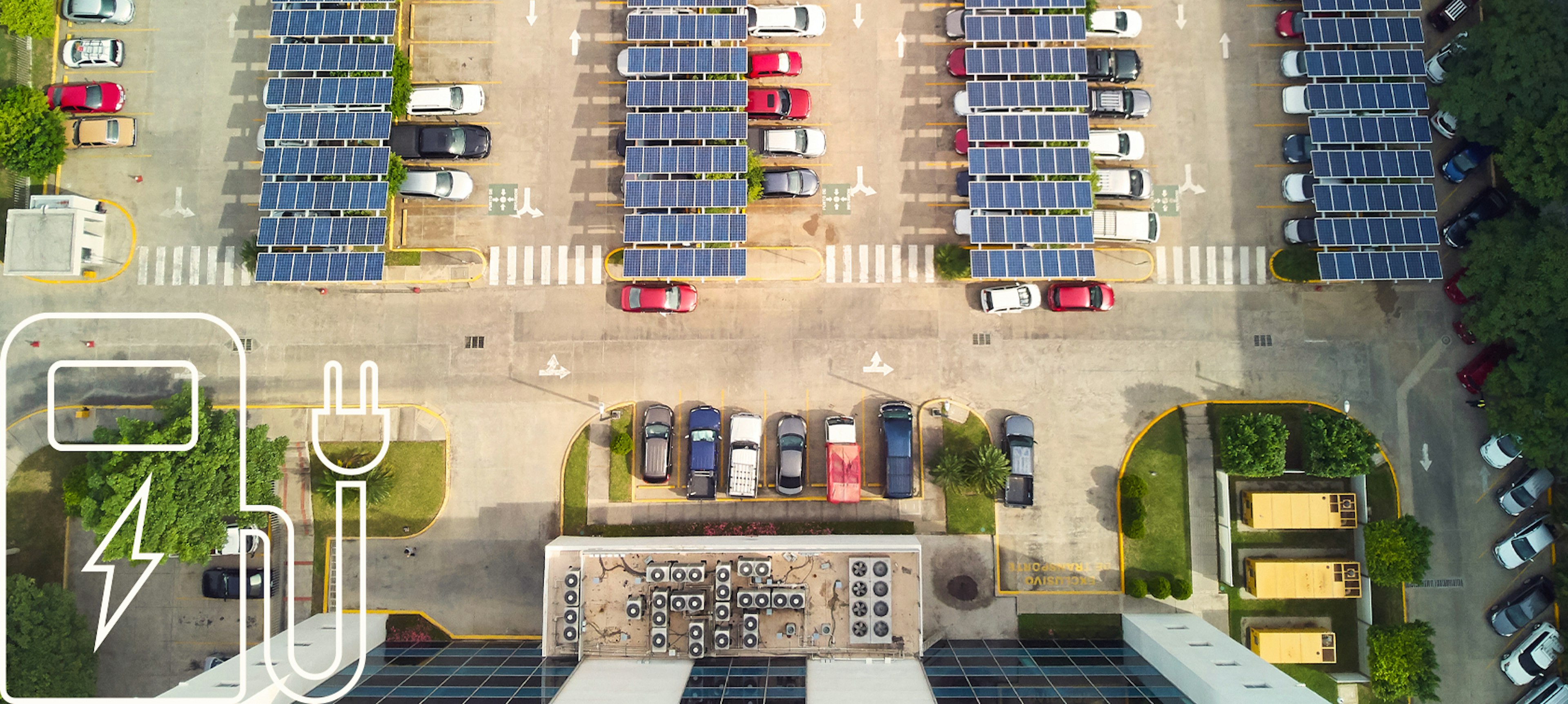
For most fleets, transitioning from traditional internal combustion engine (ICE) vehicles to a range of electrified vehicles—including battery electric vehicles (BEVs), hybrid electric vehicles (HEVs), and plug-in hybrid electric vehicles (PHEVs)—is worth serious consideration.
Yes, the fleet electrification landscape has shifted significantly. The federal clean vehicle tax credits of up to $7,500 for new EVs and $4,000 for used EVs ended for vehicles acquired after September 30, 2025, following passage of the One Big Beautiful Bill Act. However, many state, utility, and manufacturer incentives remain active, and the economic case for EVs increasingly stands on its own.
In addition, while some manufacturers have backed off their EV plans, fleet managers still have an attractive array of options to choose from, from hybrid to full-electric vans and trucks. New electric work trucks, vans, and medium- and heavy-duty units are continuing to hit the market](https://www.mikealbert.com/fleet-studies-lab/electric-hybrid-alt-fuel/a-guide-to-electric-trucks-and-vans-coming-to-market-soon), giving fleet operators even more choices.
Going electric puts you in good (global) company
Corporate commitment to decarbonization continues to build. According to the Net Zero Stocktake 2025, 63% of the world’s largest publicly listed companies have set net-zero targets, covering $36.6 trillion in annual revenue. In the United States alone, the number of companies with net-zero commitments grew 9% over the past year to 304, representing 64% of assessed U.S. corporate revenue. Meanwhile, a separate Accenture analysis found that 73% of the G2000 now have a net-zero target covering at least Scopes 1 and 2, up from 39% in 2021. If you aren’t already, now is the time to think about reducing your carbon footprint through electrification—a move that is good for the planet and a boost for your brand.
Additionally, switching to electrified vehicles can add up to significant savings on total cost of ownership (TCO). Electric power remains reliably less expensive than gasoline, with EV drivers paying an average of roughly 5 cents per mile compared to 12 cents per mile for ICE vehicles. Fully electric vehicles also have substantially lower maintenance costs—with $0 for oil changes, less wear on brakes thanks to regenerative braking, and estimated lifetime maintenance savings in the thousands of dollars. Light commercial EVs now deliver up to 13% lower TCO compared to diesel equivalents, and TCO calculators—not just sustainability commitments—are now driving the majority of fleet electrification decisions.
The EV–ICE price gap is also closing fast. According to a Trellis analysis of industry data, the average price of an electric car was 42% higher than the market average in 2020; by the end of 2024, that premium had narrowed to just 12%. A key driver: electric vehicle battery costs have dropped 40% over the past five years. The IEA's Global EV Outlook 2025 confirms that global average battery pack prices fell more than 25% in 2024 alone, and that EVs increasingly offer a lower total cost of ownership than ICE cars over the vehicle's lifetime.
With so many benefits, going electric is definitively the future of fleet management. But it isn’t something you can snap your fingers today to make happen tomorrow. Electrifying your fleet is a complex, long-term process that requires careful planning and preparation.
The road to charging starts with the right mindset
From overcoming range anxiety to satisfying installation needs, the first step toward a successful transition to an electrified fleet is actually a shift in mindset. Jason Kraus, Vice President of Operations at Mike Albert Fleet Solutions, challenges fleet owners not to think of charging vehicles as time spent waiting. Rather, it’s a passive process that happens when you’re not using the vehicle.
“Think of charging your EV like plugging in your cell phone. You don’t wait for it to charge, you just charge it while you’re sleeping or not using it,” said Kraus. “The time it takes to fuel with fossil fuels is active time you sit at the pump and monitor the liquid. But EV charging is passive. There’s no need to stop by a gas station with EVs.”
Charging up: choosing a level
In most cases, it’s far less expensive to charge a BEV than it is to fuel up an ICE vehicle with gasoline...when done correctly. To ensure the lowest cost, you’ll want to charge at home or depot chargers, as opposed to relying on the public network.
However, different facility chargers come with different benefits.
- Alternating Current (AC) or Level 1 charging (110v) - Refers to charging used with an ordinary household outlet that can add about three to five miles of charge per hour.
- Level 2 charging (208-240v) - Uses a similar amount of power as an electric dryer. Typically hardwired as opposed to an electric outlet. Depending on the charging station and vehicle, Level 2 usually adds 15-40 miles of range per hour plugged in.
- Level 3/Direct current (DC) Fast charging - Off-vehicle charging unit that hooks up the battery directly through the car's charge port. DC charging is much more powerful than a vehicle’s onboard charger and can charge much more quickly, adding roughly 100–200 miles of range in about 20–30 minutes. Large vehicles like buses and semi trucks only charge via DC charging.
Note that there isn’t any “one-size-fits-all" answer for how quickly it takes to charge a vehicle based on the level of charging. Different makes and models come with different charging speeds, which vary from model to model.
If you are installing Level 2 charging, it may make sense to have one charger per vehicle, as charging typically takes place off-shift. If you opt to install DC chargers, which increase installation costs per unit, your vehicles can charge in about a tenth of the time of an AC charger—so you’d ultimately need fewer chargers to power your fleet. Some fleets will primarily install AC chargers for passive off-shift charging, with a few DC chargers as a back-up in case of unplanned detours that leave your vehicles short on range.
Keep in mind the impact of temperature on battery range. The optimum temperature for lithium-ion batteries hovers around 70 degrees Fahrenheit, with approximately 20% range loss as temperatures rise above 100°F or drop below 32°F. When charging at home or depot, drivers should utilize preconditioning to optimize the vehicle’s range using electricity from your home or business to adjust the battery and cabin temperature before departure.
The good news: the U.S. charging infrastructure is expanding rapidly. As of early 2026, the U.S. has more than 326,000 publicly accessible charging ports across roughly 77,000 stations. In 2025, over 18,000 new DC fast-charging ports were deployed—a record-breaking 30% year-over-year increase—driven largely by private-sector investment. Nationwide fast-charger reliability also improved, averaging 93.3% by Q4 2025. The NACS (Tesla-style) charging standard is quickly gaining adoption among third-party networks, giving drivers more flexibility than ever.
Charging up: time-of-day impact
Unlike gasoline prices, which fluctuate due to seasonal changes or crude oil supply disruptions, electric charging prices can vary depending on the time of day. For example, you may pay less at night and more during the day. This practice recently started being used in California by EVgo, and occasionally Tesla’s Superchargers will institute surge pricing based on demand.
Imagine if you put gas in your car at midnight and it was $2 a gallon, but at noon, it was $4.50 a gallon. That’s similar to how peak times with electric charging works. Some charging software only allows vehicles to charge at a certain rate, and so they might slow it down during the day or increase the speed at night.
Owners of electric fleets have to consider these peak rates and ensure they are charging vehicles at the right time so as to not overpay for power. Working with a specialized electric fleet partner can help because they can negotiate with utilities, and make sure fleet owners won’t have to worry about peak charging times.
The fleet electrification process
If you think electrification might be right for your fleet in the coming years, it’s smart to start planning now. Much like creating an optimal route for your drivers, you can set up a plan for success, hitting all the key mile markers along the way, right on schedule.
Consider all your electrified options
Even if your ultimate goal is total electrification, there are many ways to incrementally drive toward a more electrified, sustainable fleet. “I jokingly say that you’re going to have to stop in Hybridville before you get to EV Town,” said Kraus. That more practical approach can mean embracing all the electrified options, including HEVs and PHEVs. According to the Qmerit fleet survey, 29% of fleets already had PHEVs in their operations as of the start of 2025, using them as a flexible bridge to full electrification. For smaller vehicles like sedans and crossover SUVs, a hybrid approach can make strong financial sense. When it comes to trucks, however, it’s often a better deal to go straight to full EV, as the gasoline cost savings are far greater for larger vehicles.
Steps to successful fleet electrification.
1. Engage the right partner. A good fleet management company (FMC) will analyze your current fleet and conduct an Electric Vehicle Sustainability Assessment to identify which drivers, routes, or vehicles are the best fit for transitioning to EVs.
2. Identify your baseline needs. Do you operate primarily in an urban environment, or do your vehicles typically travel 300+ miles daily over interstates? Does your industry require you to haul heavy loads, or can you opt for smaller vehicles? What is the status of your current fleet — is it almost time to cycle out for new vehicles, or can your current vehicles still last you a few years? What’s your daily average speed?
How you answer these questions will determine if your fleet is best suited for an electric truck, van, sedan or going the hybrid route.
3. Conduct a cost-benefit analysis. The economics increasingly favor EVs. Fuel savings of roughly $0.04–$0.05 per mile versus $0.17 for gasoline, combined with lifetime maintenance savings of $6,000–$12,000 per vehicle, often offset the higher upfront purchase price within the first two to three years. For fleet managers, building a TCO-based business case that works with or without subsidies is more important than ever now that federal credits have expired.
4. Consider time spent idling. Don’t just go with your gut on this one; review your telematics to find out how much time each day your vehicles typically spend idling. Depending on the size, running the engine without covering any miles can quickly add up in fuel costs. Compact cars with 2-liter engines consume about 0.16 gallons per hour. A large sedan with a 4.6-liter engine consumes just over twice as much fuel at idle, or over a quart. That can easily equal thousands of dollars across your fleet per year, and it’s a cost that’s totally eliminated with EVs and hybrids.
5. Research the type of charging equipment you’ll need. Installing charging infrastructure is complicated. Different vehicles require distinct types of chargers, and the different charging levels vary in pricing and charge times. You’ll also need to determine if you’ll go with home or depot charging, filling in with public charging as needed.
6. Explore available incentives. While federal EV tax credits ended in September 2025, state programs remain active in many parts of the country. Plus, some utilities still provide make-ready infrastructure rebates, equipment incentives, and special EV charging rates. The Alternative Fuel Vehicle Refueling Property Credit (30C) for charging infrastructure remains available for equipment placed in service before June 30, 2026, offering up to 30% of costs (up to $100,000 per station in eligible areas). Automakers are also offering their own fleet volume discounts and lease specials to maintain sales momentum.
7. Execute the charging infrastructure. From contracts that vary by city or county, to environmental considerations, to sourcing the actual chargers — the devil is in the details when it comes to installation of charging infrastructure.
8. Track your data. Data is the backbone of effective fleet management. After electrification, you’ll want to start continuously tracking data such as:
- Total cost of ownership compared to ICE vehicles, including down payments, fuel savings and charging infrastructure costs
- Carbon reduction
- New leads and sales after environmental positioning
- Employee satisfaction and retention for those driving EVs, as well as attracting new talent
Typically, once a fleet owner sees this data and compares it to historical data, it solidifies their decision to set more procurement goals for EVs in the future.
Potential roadblocks en route to electric
Whether it’s from government agencies or utilities, expect to spend time and energy navigating roadblocks like bureaucratic red tape and complex permit processes. You will need to work with various parties including utility providers, property managers, environmental consultants, and more to ensure you stay compliant on the road to electrification.
“In a still-emerging market like EVs, working with partners who have an existing relationship with well-established charging equipment vendors is very useful,” Perry said. “Oftentimes, there will be a requirement in an obscure code somewhere that isn’t always obvious, but a fleet partner can help you identify those.”
Navigating a shifting policy landscape
The federal policy environment for EVs has changed substantially. The termination of federal clean vehicle tax credits, the suspension and review of the NEVI Formula Program guidance, and potential tariffs on imported vehicles and parts have introduced new uncertainty. However, industry analysts note that the private sector has stepped up to fill the gap, with 2025 representing the first year in which private investment—not federal funding—drove the majority of charging infrastructure buildout. State-level programs, utility incentives, and automaker discounts collectively provide a meaningful incentive stack even in the absence of federal credits. The most important strategic shift: build your electrification business case on TCO fundamentals that work regardless of the incentive environment.
Property leasing considerations
Many fleet owners have long-term leases on their facility as opposed to owning them outright. When leasing, you must take into consideration how to improve a property that does not belong to you. This might mean negotiating with the owner to pay for improvements or getting a lower price in rent in exchange for covering up-front costs of charging. There is always the risk that the property owner may not allow such modifications. Come to the conversation armed with a plan, whether that’s providing data points on the rise of EVs to convince the property owner to pay for these improvements or even uninstalling charging tech upon the termination of your lease. Similarly, if your drivers will be utilizing home chargers, your business may need to arrange to pay for all or part of the setup.
Capital costs for ongoing upgrades
Buying electric chargers, hiring contractors to install them and paying for continuous upgrades are just a few of the many capital costs involved with a fleet electrification strategy. Fortunately, all of these speed bumps can be mitigated with the assistance of an electric-focused fleet partner who can:
- Acquire all necessary permits, research government regulations and incentives and negotiate with utility companies
- Address concerns from property owners or landlords and uninstall electric equipment at the termination of a lease agreement, if necessary
- Handle all the capital costs including acquisition, installation and charging upgrades, allowing for one easily payable invoice
The broader market: momentum despite uncertainty.
Despite policy shifts, the broader EV market continues to grow. Globally, electric car sales reached 20.7 million in 2025—up 20% year-over-year—representing roughly one in four new passenger vehicles sold worldwide, according to Benchmark Mineral Intelligence. According to Cox Automotive, EV sales in the U.S. hit an all-time quarterly record in Q3 2025 at 438,487 units and 10.5% market share, as buyers rushed to purchase before the federal tax credit expired on September 30. For full-year 2025, EV sales came in at roughly 1.28 million units—the second-best year on record—with a 7.8% annual market share. In the commercial space, over 38,000 medium- and heavy-duty electric trucks are now deployed across 386 fleets in the U.S., with 2025 marking the third-highest deployment year on record. FedEx now operates more than 8,000 electric vehicles across its network, and Amazon has grown its Rivian electric delivery van fleet to over 30,000 units—a 50% increase in 2025—with 17,000 chargers installed at over 120 delivery centers nationwide.
Battery costs continue to fall. According to BloombergNEF’s 2025 Lithium-Ion Battery Price Survey, global average lithium-ion battery pack prices dropped 8% year-over-year to a record low of $108 per kWh, with BEV-specific packs averaging $99/kWh—the second consecutive year below the $100 threshold. The IEA’s Global EV Outlook 2025 noted that EVs increasingly offer a lower total cost of ownership than ICE vehicles over the vehicle’s lifetime, and that the average price gap between battery electric and ICE cars fell below 15% for small cars and 25% for SUVs in 2024. Innovations in battery chemistry—including the rapid adoption of lower-cost lithium iron phosphate (LFP) cells—and structural integration are making EVs increasingly practical for commercial fleet use.
Why opt for a fleet electrification partner?
A well-planned, step-by-step strategy is the best route to electrification success—and the right fleet electrification partner will work closely with you throughout that process to help you achieve optimal results, from identifying your needs and assessing your fleet to establishing your charging infrastructure and tracking results.
That's where Mike Albert can help. Our company has avidly supported the use of EVs in fleets for well over a decade, and today, we are one of the nation’s top leaders in fleet electrification and management. Our EV team has developed strong relationships with manufacturers and acquired extensive EV product knowledge through nonstop research and hands-on experience. We put all this expertise to work for your organization by helping you design a holistic plan for integrating the right EVs and charging solutions into your fleet operations.
“Our motto is ‘We handle everything you need to power EVs,’” said Kraus. “We know the ins and outs of what it takes to get you to the front of the line.”
To learn more about the future of EV fleets, talk to a fleet electrification expert at Mike Albert today.
Skills covered in the class
Fleet Electrification
Mobility-Mindset
Data-Driven Decision Making
Vehicle Specification
Similar Classes

Electric, Hybrid & Alt. Fuel
Powering EVs: The in's and out's of fleet charging infrastructure
April 1, 2026
Electric, Hybrid & Alt. Fuel
The fleet owner’s guide to electric trucks and vans
March 13, 2026

Data, Telematics, & Logistics
How do you know if you are managing your fleet costs effectively?
October 9, 2019