Editor's note: Charged Fleet originally published this article, which has since been updated.
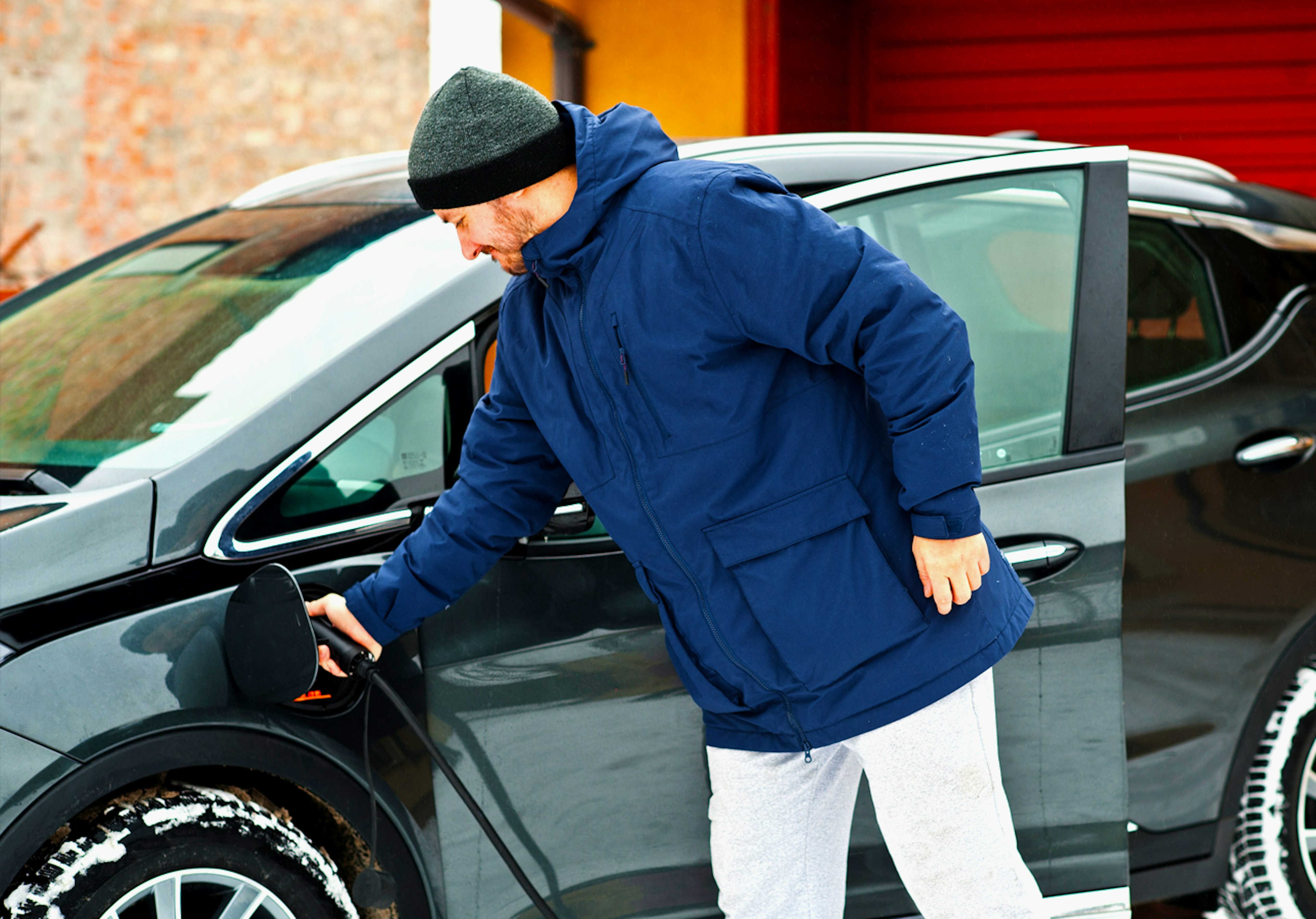
Leaves are falling, temperatures are dropping, and many drivers are starting to think about how to best prepare their vehicles for impending winter weather. The seasoned electric vehicle (EV) owner will know what to expect when charging and driving their EV in the winter. But if you’ve recently electrified your fleet, what do your drivers need to know? Once you’ve stocked your fleet’s trunks with scrapers and ice melt, here are some key tips for how to keep your EVs running smoothly once the mercury drops.
Expect reduced mileage and slower charge times.
Winter weather can change how we drive, but it also affects the vehicle itself. In EVs, you'll most likely see this in the lithium-ion battery that powers your car or truck. Frigid temperatures slow the chemical reactions inside the battery, resulting in longer charging times and reduced driving range. According to Recurrent's 2025/2026 winter study of over 30,000 EVs, electric vehicles retain an average of 78% of their maximum range at 32°F, and about 70% at 20°F, though the best-performing models hold on to as much as 88%.
Consumer Reports' winter testing found roughly a 25% range reduction at highway speeds in freezing conditions, and up to 50% loss on short trips with frequent stops. The biggest culprit isn't actually the battery chemistry; it's cabin heating. Unlike ICE vehicles, which repurpose engine waste heat, EVs must generate cabin warmth from the battery itself, drawing 3 to 5 kW continuously. Here's the good news: heat pump technology, now standard or available on most new EVs, adds roughly 10% extra range in freezing conditions compared to models with resistance heaters alone. Keep in mind that the range loss is entirely temporary, returning to normal as temperatures rise.
If your drivers are making long trips in winter, they will need to be aware of their battery range and, if necessary, where they can find public charging stations on their route. They will also want to plan around longer charge times and take advantage of preconditioning — warming the battery and cabin while still plugged in — which can significantly improve both range and charging speed. Most modern EVs allow drivers to schedule preconditioning through a mobile app before departure.
Use your preconditioning features.
Most EVs today come equipped with preconditioning features that optimize battery performance in extreme temperatures and keep drivers comfortable. Preconditioning can be done for both the cabin and the battery.
Cabin preconditioning allows drivers to pre-heat or pre-cool the vehicle's interior before hitting the road. Instead of getting in and waiting for the cabin to warm up and the windows to defrost, drivers can start the process ahead of time. If initiated while the car is still plugged in, the energy comes from the grid rather than the battery, so the driver starts their route with a full charge and a comfortable cabin, consuming less energy on the journey. Consumer Reports tested this in January 2025 on the Kia EV9, Acura ZDX, and Tesla Model 3, finding measurable improvements in both efficiency and remaining range when preconditioning was used before departure.
Many EVs also offer battery preconditioning, which regulates the battery's temperature for optimum charging speed at the end of a trip. Proper battery preconditioning can extend range in colder months and preserve long-term battery health. Most newer models now include a scheduled departure feature: drivers set their planned leave time through the vehicle's infotainment screen or mobile app, and the car automatically handles both cabin and battery preconditioning so everything is ready to go. Not all vehicles do this automatically, however, and some older models still require drivers to initiate preconditioning manually through an app. It's worth auditing how preconditioning works across your fleet's EVs and training drivers to use it consistently.
Optimize your wearable parts.
One of the beauties of EVs is that they far fewer parts than ICE vehicles — generally making for less winter prep work. But while there are far fewer moving parts and systems that need regular maintenance, drivers should still remember to check and replace the standard “wearable” pieces of their EVs before a cold snap arrives.
Tires can make a huge difference in driving through winter weather, so make sure your fleet’s tires are properly inflated (which ensures less rolling resistance and can extend your range) and have enough tread. Depending on your location, you might even consider swapping all-purpose tires for an appropriate winter version. It’s also a good idea to check that all headlight bulbs and windshield wipers are working properly, which can be invaluable when your drivers are venturing through snow and sleet.
Driving through winter weather is hardly a great time, but with a thorough understanding of EV performance and a bit of preparation, you can ensure your electrified fleet is well-equipped to handle frigid temperatures and snowy streets safely and efficiently.